
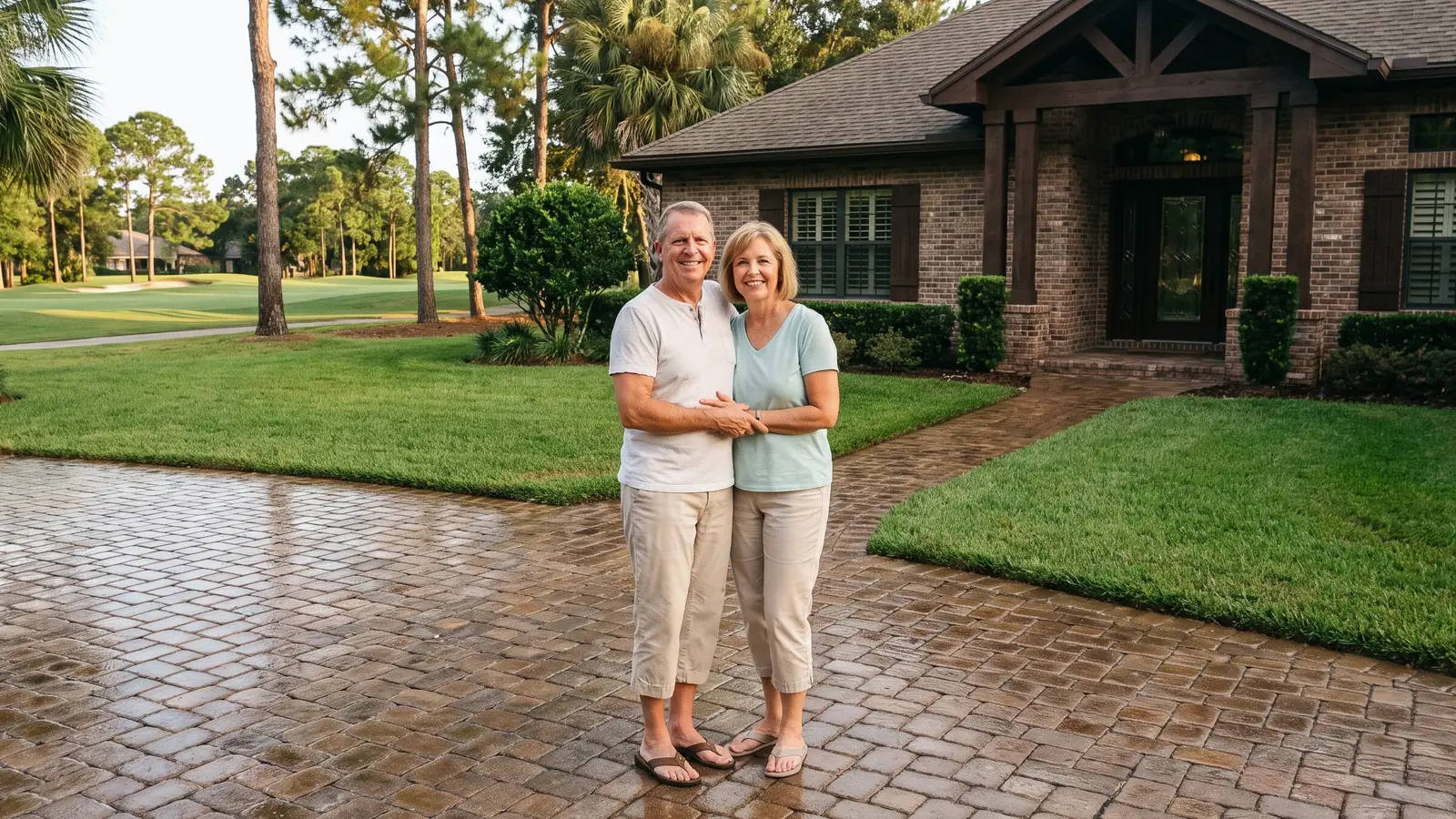
Paver sealing for Venice homes
Paver Sealing in Venice, FL
Venice homes near the Intracoastal Waterway or Armada Road can get a free paver sealing estimate by calling (941) 206-6354.
- Brings out deeper paver color
- Fresh joint sand helps lock pavers in place
- Gives weeds less room to grow
- Makes the surface easier to keep clean
- Free estimate, no obligation
Request a Free Estimate
Free, no obligation.
Fast, careful paver sealing in Venice
Need paver sealing in Venice? A local contractor can wash, re-sand and seal your driveway, lanai or pool deck, and the first step is a free estimate. A click on ask for a free estimate brings a reply within 1 business day, usually much sooner.
Maybe your Venice front walk has gone dull and a few joints have sprouted weeds. Maybe the driveway looks tired next to a freshly painted house. Sealed Venice pavers go back to a deeper, even color, and the whole front of the house looks cared for. Call (941) 206-6354 to talk about yours.
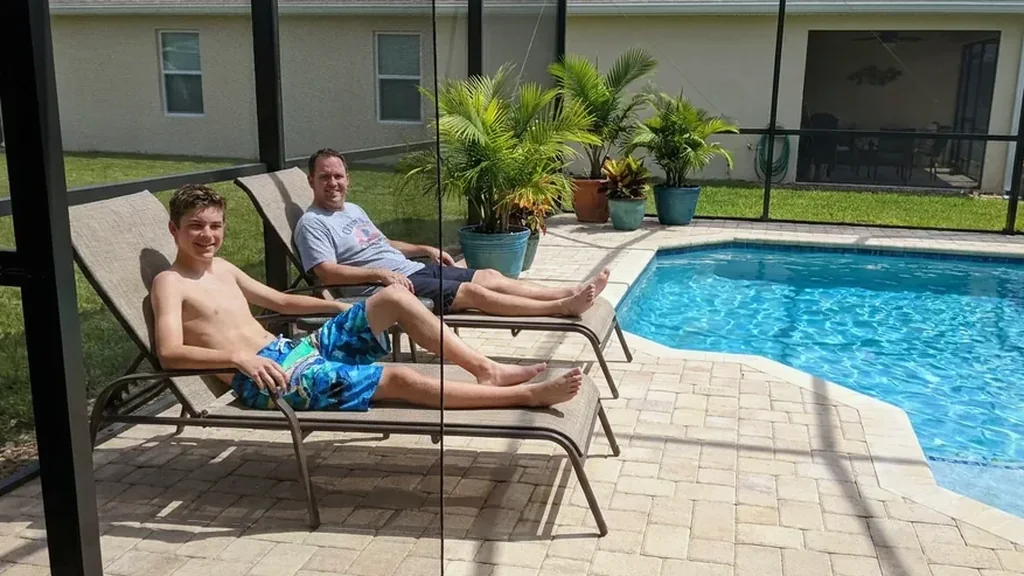
Why hire a local paver sealing contractor in Venice?
Venice homeowners tend to hire locally because the weather, the older planned streets and the mix of Island and inland homes all shape the work. To see how that fits your property, ask for a free estimate.
Free estimate first
The contractor looks at your Venice pavers and gives you a price before work is agreed. There is no charge and no pressure. You can compare it with the range below.
The published range
Companies in Southwest Florida commonly publish $1.50 to $3.00 per square foot to clean, sand and seal. A Venice bid should land near it.
Your finish, your call
Matte is the quiet choice beside stucco and tile roofs in Venice. A wet look is shinier but shows scuffs sooner, and you decide.
Repairs before coats
Sunken or cracked pavers get fixed before sealing, so the new coat does not lock in a dip. You see that in the Venice estimate. That keeps the price honest.
Get Your Free Estimate in Venice
Tell us about your pavers in Venice.
Free, no obligation
What paver problems show up most in Venice?
Four wet months in a row, and a long humid season around them
Venice averages 51.27 inches of rain a year, and June through September run about 7 to 8 inches each. The National Weather Service says the Southwest Florida rainy season brings showers almost daily from mid-May to mid-October. Venice pavers stay damp for long stretches, and growth takes hold wherever shade lingers. Sealer needs a dry surface, which means the summer schedule has to bend around the forecast. That is why a plan for August looks different from a plan for February, and why the contractor asks when your pavers last dried out fully.
Sunken spots and thin joints
A Venice paver company says shifting, sinking, cracked or broken pavers should be repaired before sealing. It also says to check joint sand and top it up, without filling it to the surface. Landscape Ontario says lost joint sand widens joints and lets soil in. When the joints are right, the sealer has something solid to bond to, and weeds find less room. The result is a plainer fix than most owners expect: a few repairs, some sand and a clean coat.
A coat from an earlier owner
A Venice home that has changed hands may have had its driveway done more than once. A local paver company says oil-based sealers should never be used on pavers and prefers water-based sealer that draws into the stone. Water-based and solvent-based sealers do not mix, so the contractor has to learn what is already on your pavers. A cloudy coat may need to come off. You can tell the coat is a problem when it looks milky, peels at the edges or leaves patches that stay dark after rain.
Orange streaks from irrigation
In Venice, iron is the usual cause of orange streaks, and the University of Florida says most Florida well water carries a lot of it. On pavers, that shows up as rust-colored fans near lawn edges and sprinkler heads. The streaks are treated in the wash. If sealer goes over them, the stain stays, so say where your sprinklers reach. Look for the fan-shaped marks closest to the lawn, since those show where the sprinkler spray lands on your pavers.
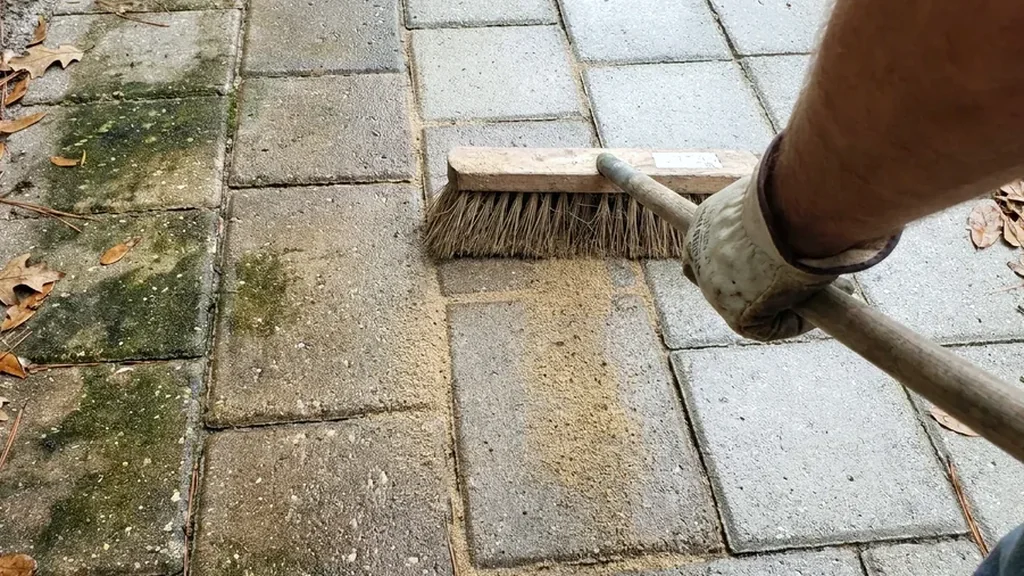
Green film on a shady lanai floor
Landscape Ontario says moss, lichens and algae should not grow on concrete pavers unless the spot is heavily shaded. Under a Venice lanai roof, a tree or a tall hedge, a damp paver can still go green. Washing at the right pressure clears it, and the same source says professionals work between 600 and 2,000 psi. Sealing afterward helps pavers stay cleaner longer. A shady paver stays damp longer, which means a green patch can come back sooner there than on the sunny side of the same driveway.
Which part of Venice do you live in, and why would the contractor ask?
Why does Venice paver history matter?
Because the answer tells the contractor what the pavers have been through. Venice Island is reached by bridges over the Intracoastal Waterway, and the Venice Bypass loops around it. The mainland has I-75 running through its inland parts. Say where you are when you ask for a free estimate, and the contractor can plan for your side of town.
Which historic Venice streets have older pavers?
Some Venice neighborhoods are historic. The National Register lists the Edgewood, Eagle Point and Venezia Park districts, along with the Armada Road Multi-Family District, Hotel Venice and the Triangle Inn. A listing does not by itself set a rule for your driveway, but the City of Venice can tell you if one applies. If you live in one of these areas, call (941) 206-6354 and ask the contractor to wait for your answer from the city.
Do seasonal Venice homes need extra care?
Venice is also a town where many homes sit empty part of the year. The census counted 19,992 homes in 2020, and 30.2 percent were vacant. A driveway at a home that sits closed for months can pick up damp growth, so mention your travel dates. You can ask for a free estimate and share them.
What does paver sealing cost in Venice?
What sets the price of sealing in Venice?
Companies across Southwest Florida commonly publish $1.50 to $3.00 per square foot to clean, sand and seal. For a Venice property, the total follows the square feet, so a Venice driveway, a front walk and a lanai floor add up fast. Repairs, thick growth and an old coat can push a job toward the top of the range. To see your own number, ask for a free estimate.
Does access change a Venice quote?
Easy access keeps a job cheaper. A wide driveway off Venice Avenue is simpler than a narrow side yard that has to be worked by hand. Heavy rust or a lot of missing joint sand also add time. Call (941) 206-6354 to find out which of these fit your Venice yard.
| Paved area | Typical example | Clean, sand and seal |
|---|---|---|
| 300 sq ft | Small patio or walkway | $450 to $900 |
| 600 sq ft | Two car driveway | $900 to $1,800 |
| 1,000 sq ft | Large driveway or pool deck | $1,500 to $3,000 |
| 1,500 sq ft | Driveway plus pool deck | $2,250 to $4,500 |
Math based on the $1.50 to $3.00 per square foot that Southwest Florida paver companies publish. Your contractor sets the actual price after seeing the surface. Repairs, leveling and stripping failed sealer are usually extra.
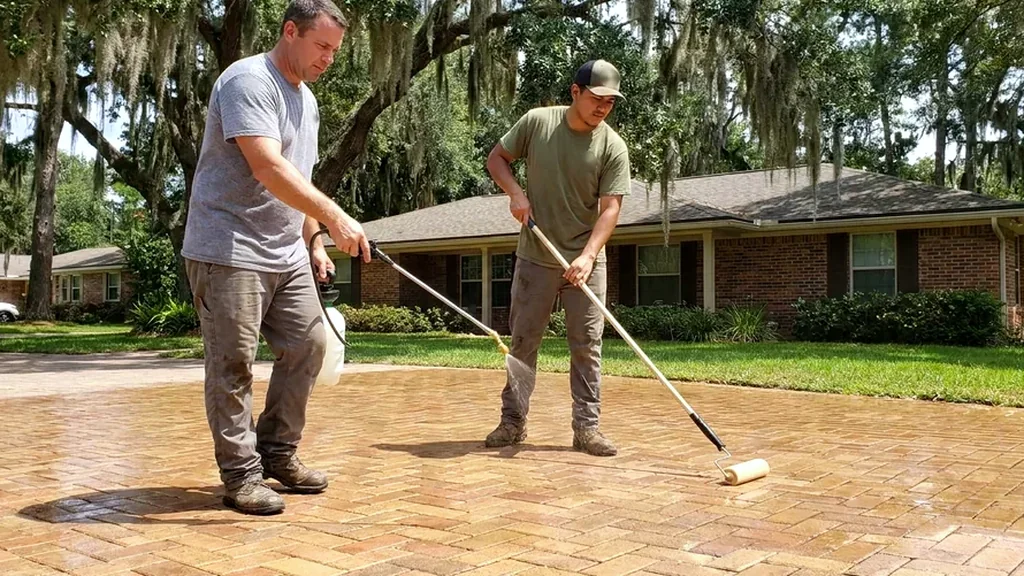
How does a paver sealing job work in Venice?
Walk the property and fix what is loose
The contractor walks your Venice pavers first and marks any that have sunk, shifted or cracked. Those get repaired before sealing, since a coat of sealer would simply preserve the dip. The contractor also checks what is already on the surface, because water-based sealer cannot be applied over solvent-based sealer. That is why an old coat is worth a quick test. That order protects the sealer, because every later step depends on the one before it.
Wash the pavers
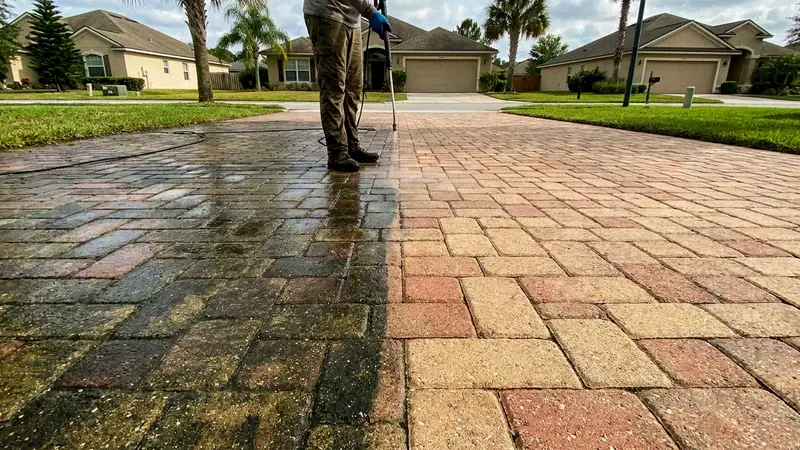
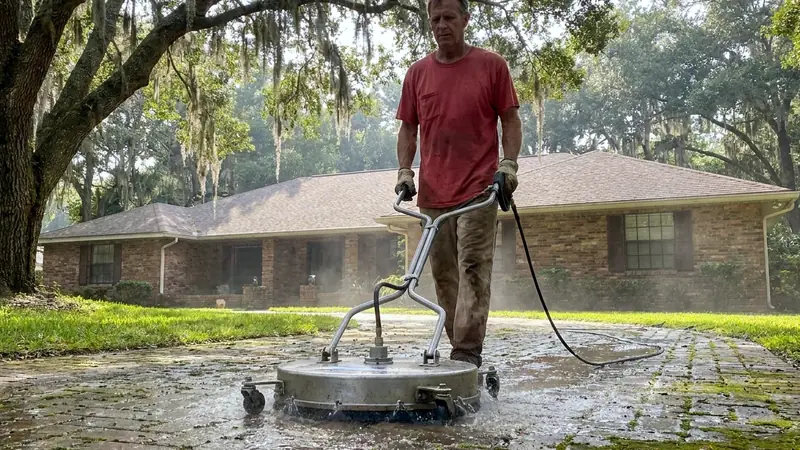
Next the surface is washed to remove algae, mold, mildew, dirt and weeds. Pressure is kept in the professional range of 600 to 2,000 psi, so the pavers are cleaned and not scarred. Rust from Venice sprinklers gets treated now. Washing also pulls sand out of the joints, which is the reason the next step exists. This is also the moment to ask about the finish, since a sample board can show the difference.
Check and refill the joint sand
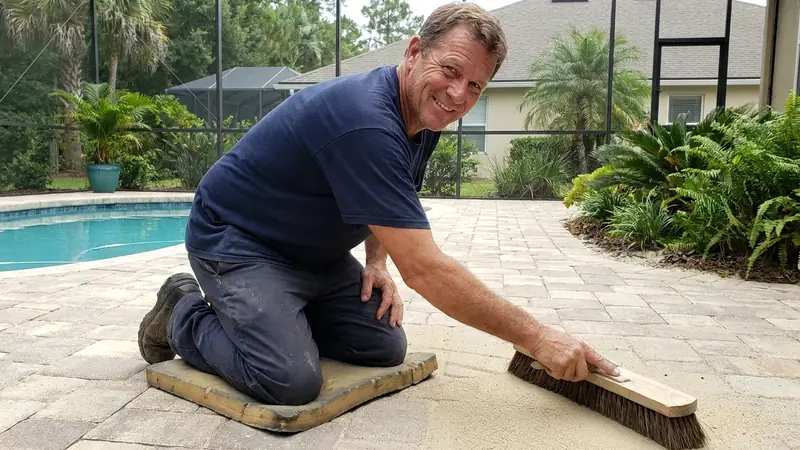
Joint sand goes back in until the joints are full but not packed level with the paver face. A Venice paver company advises against filling to the top. Good sand lets the sealer bond the joints and helps keep weed seeds out. A Venice driveway with wide, open joints may take longer here. If the joints were dry and low, expect the contractor to bring extra sand for the job.
Give the pavers time to dry
After the wash the pavers have to dry fully, because sealer will not hold on a damp surface. In Venice that can mean waiting out a summer shower or a humid morning. A shaded Venice patio dries slower than an open drive. A careful contractor sets the sealing day after looking at the forecast. Drying times change with shade, wind and humidity, so the contractor may rearrange the day.
Apply the sealer and give it time
Two even coats of water-based sealer are common in Venice. Keep feet off for about 24 hours and cars off for 48 to 72, based on one nearby company's timing. Full cure takes about a week. Move furniture and planters back only after that time has passed. Fresh sealer on a hot Venice afternoon can feel ready sooner than it is, so give it the full time.
Complete paver services in Venice
How does a Venice sealing job run?
Here is how a Venice job usually runs. The contractor repairs low or loose pavers, washes the surface, adds joint sand, lets everything dry, and applies the sealer. One Venice company puts on two coats of water-based polyurethane. To hear how that applies to your Venice yard, call (941) 206-6354.
Which Venice surfaces get sealed?
Not every surface in Venice is the same. Venice driveways face tires, patios face chairs, and pool decks face bare feet and wet towels. A lanai floor under a roof stays shaded and damp, so it may need extra attention, and the contractor will look at it closely. Tell the contractor what you have when you ask for a free estimate.
Which finish suits a Venice home?
Finish matters more than most owners expect. Matte sits quietly next to stucco walls and tile roofs in Venice. A wet look gives a bright shine but shows scuffs sooner, and a Venice paver company says it is not typically recommended. Call (941) 206-6354 if you want to compare the two on a sample.
How does rain set the Venice schedule?
Timing in Venice follows the rain. The wet months run from about mid-May to mid-October, and sealer needs a dry surface, so Venice summer work waits for clear windows. After sealing, a nearby company waits 24 hours for foot traffic and 48 to 72 hours for cars. Ask about dates when you ask for a free estimate.
Questions to ask before you hire
- What happens if a summer thunderstorm shows up before the sealer has cured?
- What tells me it is time to seal again, and how long does a coat usually last?
- Can I see the finish on a spare paver before the whole job gets sealed?
- After the last coat, how many hours before I can drive on it?
- Does the quote include new sand in the joints, and what kind goes in?
- How do you keep sealer off my pool cage, my lanai screens and my landscaping?
- My HOA has to approve the sealer, so can you give me what they ask for?
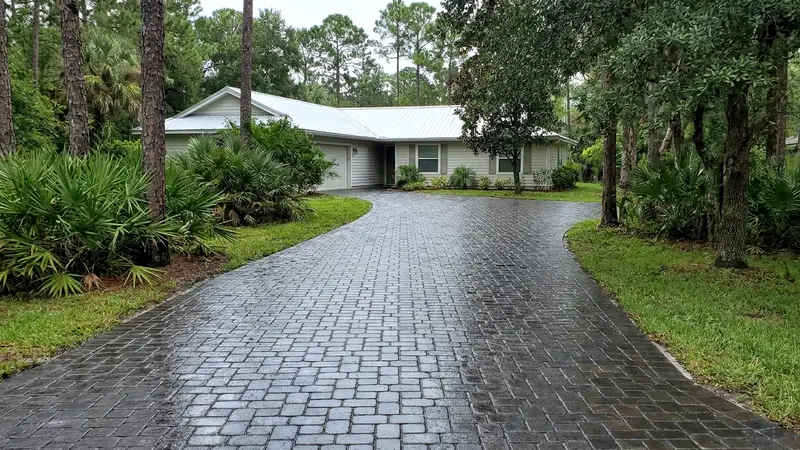
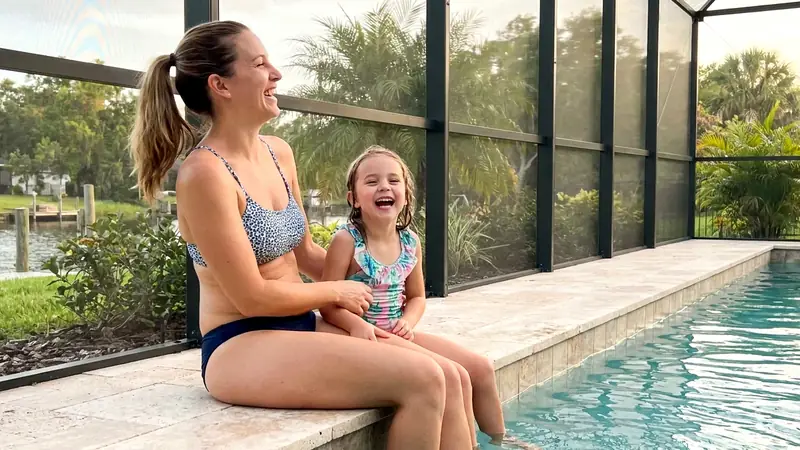
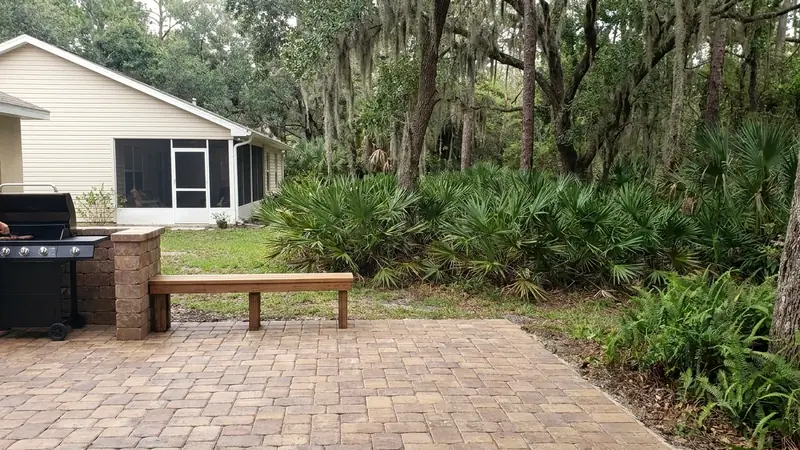
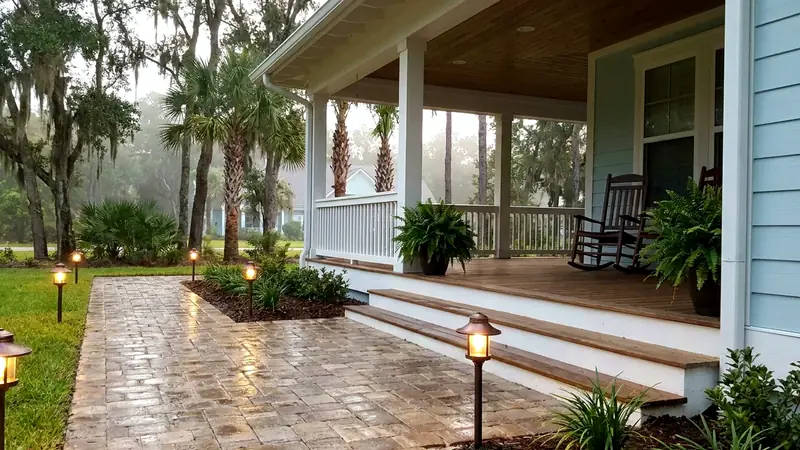
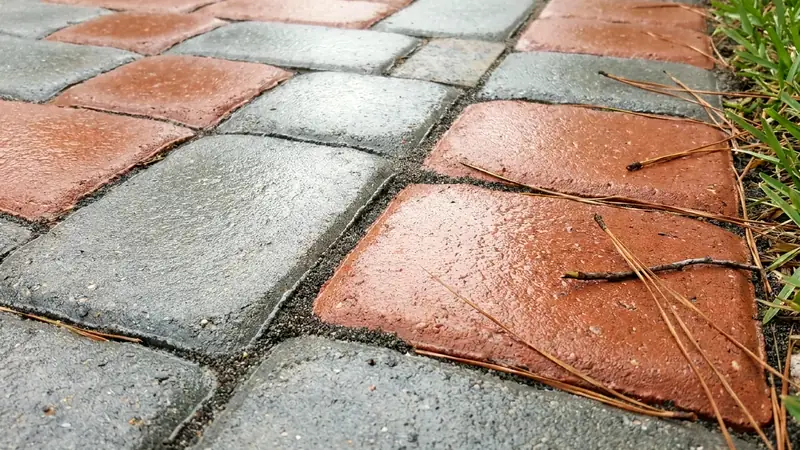
What do sealed pavers look like around Venice?
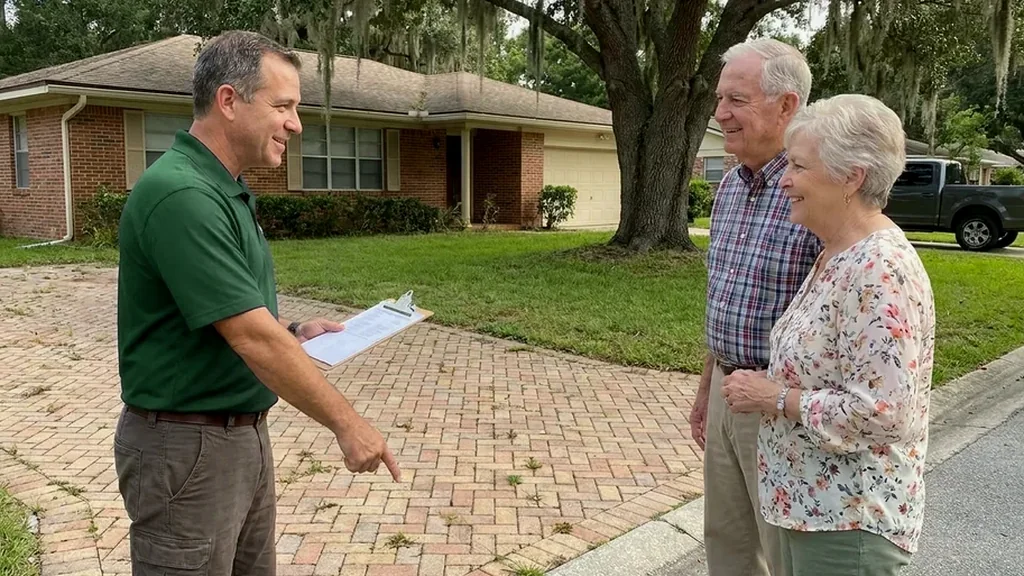
Why local matters in Venice
Why hire a contractor who knows Venice?
A Venice contractor knows the town is split between the Island, the older streets and the newer inland neighborhoods. Each area has its own mix of shade, irrigation and age of pavers. Hiring someone who works here cuts down on guesses. To reach a local contractor, call (941) 206-6354.
How does a wet Venice summer change the work?
Local help also matters in a wet summer. Venice gets 7 to 8 inches of rain a month from June through September, and a nearby contractor can slide a day without a long drive. That keeps sealer from going down on a wet surface. Ask the contractor how a rainy morning changes your schedule, and ask for a free estimate to start.
Which Venice problems come up again and again?
Finally, a local contractor has probably seen the usual Venice problems before. Damp lanai floors, sprinkler rust and joints that need sand are all common questions. That experience helps the estimate be realistic. If you would like a straight answer on your property, ask for a free estimate.
What did John Nolen's plan leave behind for Venice homeowners?
How did Venice grow from a planned town?
A walkable core, mainly, and that is what Venice still has. Fred Albee bought 112 acres from Bertha Palmer and hired planner John Nolen, who stayed on when the land went to the Brotherhood of Locomotive Engineers. The first streets and utilities went in during 1925 and 1926. If your home sits near that early grid, ask for a free estimate and mention the year it was built.
What is Venice like for pavers today?
Today you can walk the Venice MainStreet shops and restaurants, sit in the Venice Theatre, or ride the 9.3-mile Venetian Waterway Park trail beside the Intracoastal. Down at Caspersen Beach, people hunt fossil shark teeth, which is why Venice has been called the Shark's Tooth Capital of the World. Near any of these places, call (941) 206-6354 and ask about a free estimate. The Venice Area Audubon Rookery is another stop if you like birds.
Frequently Asked Questions
How much does paver sealing cost in Venice, Florida?
Venice quotes tend to follow the $1.50 to $3.00 per square foot that Southwest Florida companies publish for cleaning, sanding and sealing. A Venice job moves within that range based on size, repairs, growth and any old coat. Ask for the total square feet in writing so you can compare bids on the same footing. Pool decks, a front walk and a lanai floor all count toward the total. Square footage is the easiest number to compare.
Is it a good idea to pressure wash pavers in Venice?
Yes, as the first step of a sealing job, if the pressure is set right. Landscape Ontario says professionals work between 600 and 2,000 psi. Washing also removes joint sand, so the sand is replaced before sealing. Pressure alone does not do the whole job, because the surface also has to dry before sealer goes on.
Does the water in Venice leave stains on pavers?
Orange or rust streaks usually come from iron, and the University of Florida says most Florida well water is high in iron. If your sprinklers run from a well, check where the spray lands on your pavers. The contractor treats the streaks during the wash, before any sealer goes down. The wash is the right time to treat the marks, so mention them at the estimate.
When can I walk and drive on pavers after sealing in Venice?
Feet can usually return after a day, and cars after two to three days, according to HD Surface Solutions, which says a full cure takes about seven days. Keep sprinklers off while it sets. Venice humidity and shade can slow the drying, so the contractor will say when the surface is ready for traffic.
How often should pavers in Venice be sealed again?
A Venice paver company says to re-seal new or good pavers every 3 to 5 years and older worn pavers in 2 to 3 years. Companies across the region commonly quote two to five years. Heavy shade or hard use may push you toward the shorter end. A visit to look at your joints and shade gives a more honest number than a guess.
Should I fix sunken pavers before sealing in Venice?
Yes. Sealer preserves whatever it covers, and a sunken or cracked paver stays that way under the coat. A Venice company says to repair shifting, sinking, cracked or broken pavers before sealing. The contractor should show you which pavers need repair before the quote is final. That keeps one problem from becoming two.
What type of sealer is used on Venice pavers?
One Venice paver company uses two coats of a water-based polyurethane sealer that draws into the pavers, and it warns against oil-based products. Because the two types do not mix, whatever is on your pavers now picks the next product. Ask for the product name. Keep the product name with your home records so the next coat matches.
How long do pavers need to dry in Venice before sealing?
Sealer needs a dry surface, and in the rainy season that can mean waiting a day or more. Shaded pavers dry slowest. The contractor picks the sealing day after checking the forecast and the condition of your surface. Shade, wind and a sunny afternoon can all change how long that takes.
Are sealed pavers in Venice, Florida safe to walk on when wet?
It depends on the finish. Unilock warns that a high gloss coat can be slippery when wet, so ask for a matte finish on a pool deck or a walk that gets wet often. Venice rain and sprinklers keep many surfaces damp. Ask the contractor to name the sealer and its finish before the job.
Does sealing change how pavers look in Venice?
It can. Some sealers leave the surface looking as it did, and others deepen the color with a wet look. HD Surface Solutions says wet look and matte protect equally, so the choice comes down to taste. Ask to see a sample on a spare paver before the full job.
How many coats of sealer do Venice pavers get?
HD Surface Solutions puts three coats on a driveway and two on a patio or pool deck. Ask the quote to say how many coats each area gets and how long the surface dries between them. The count and the product name are two numbers worth comparing between bids.
When do summer storms make paver sealing harder in Venice?
The National Weather Service says severe storms are most likely from late May through June, and the rainy season peaks from July through early September. Sealer needs dry pavers, so those weeks can move a job. A flexible window and a contractor who watches the forecast keep the date from sliding far.
Ready for a Free Estimate in Venice?
Call (941) 206-6354 and tell us about your pavers.
Free, no obligation