
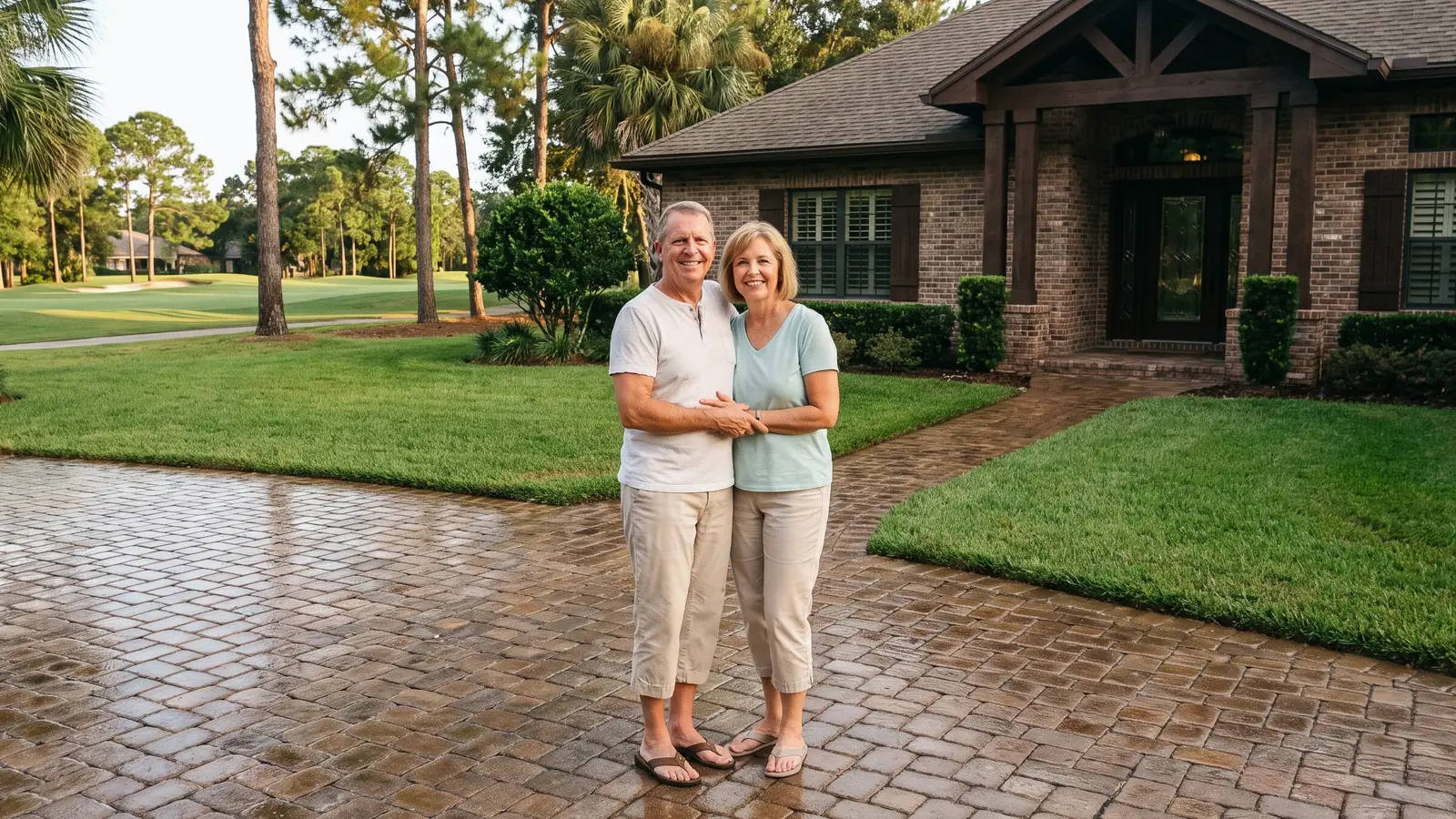
Paver sealing for Fruitville homes
Paver Sealing in Fruitville, FL
Fruitville pavers on old Celery Fields country can get a free sealing estimate, so call (941) 206-6354.
- Brings out deeper paver color
- Fresh joint sand helps lock pavers in place
- Gives weeds less room to grow
- Makes the surface easier to keep clean
- Free estimate, no obligation
Request a Free Estimate
Free, no obligation.
Fast, careful paver sealing in Fruitville
Paver sealing in Fruitville is available for driveways, lanais, pool decks and walkways on both sides of Fruitville Road. A local contractor does the wash, the sand and the sealer after a no-charge look at your lot. Fill in a request with ask for a free estimate and expect a reply within 1 business day, usually much sooner.
Think of the corner where your driveway meets the street, where the color has gone pale and a few weeds stand in the joints. A wash, new sand and a fresh coat make the whole surface match again. If you want to talk it over first, call (941) 206-6354 and describe that spot.
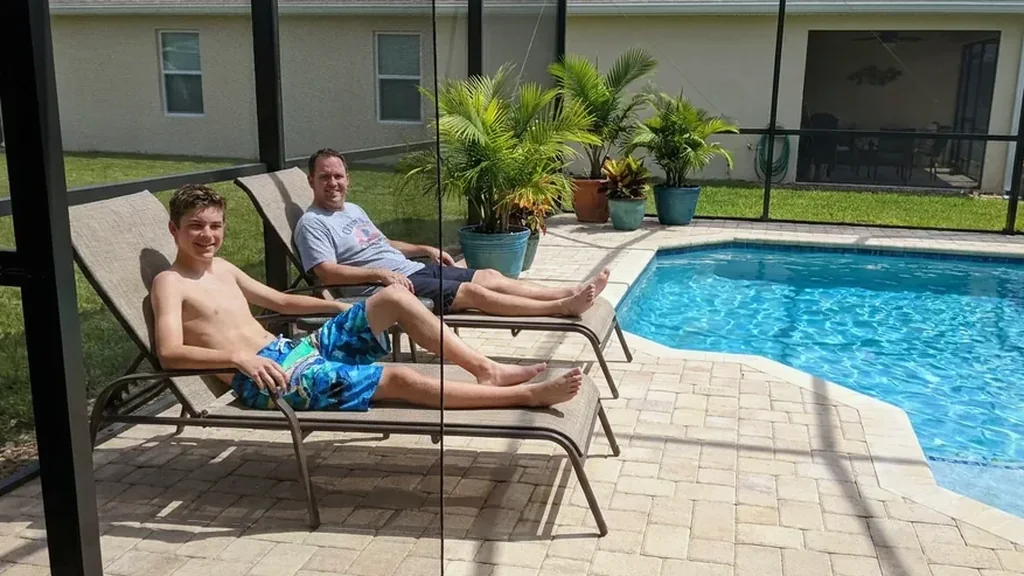
Why hire a local paver sealing contractor in Fruitville?
Fruitville grew from farm fields into a town of homes, and the ground under many driveways still remembers the wet marsh. A local contractor plans for that, so ask for a free estimate to hear how it applies to your pavers.
See it, then price it
A local contractor walks your Fruitville lot at no charge, then names a price. You decide afterward.
A yardstick for bids
Published rates run $1.50 to $3.00 per square foot around Southwest Florida. Hold each Fruitville bid up to that figure.
A look you can live with
Matte stays low-key. Wet look glows but shows scuffs sooner. Pick what suits your home and your driveway.
Free of pressure
You set the date and decide whether to proceed. A Fruitville estimate carries no obligation.
Get Your Free Estimate in Fruitville
Tell us about your pavers in Fruitville.
Free, no obligation
What paver problems show up most in Fruitville?
Ground that began as marsh
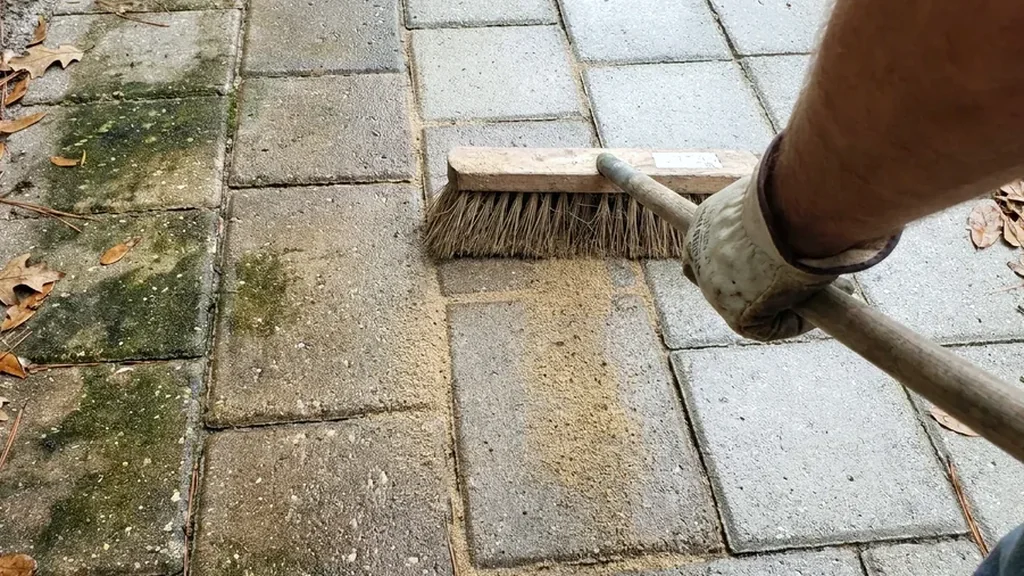
Fruitville was a large sawgrass swamp until the Sarasota-Fruitville drainage district was formed in 1923. Draining the wetland gave about 8,000 acres of farmland. The Palmers found the freed soil rich but soft. Wet, low ground is where algae gets a start on pavers, and sealer needs a dry surface, so low corners of your drive deserve a close look. If your Fruitville drive has a spot that never seems to dry, say so at the first visit. That one detail changes how the job is planned. Pavers at the low end of a sloped lot are the usual place. If your Fruitville drive has a spot that never seems to dry, say so at the first visit. Pavers at the low end of a sloped lot are the usual place. The Celery Fields site, east of I-75 and south of Fruitville Road, grew celery from the late 1920s because its low, wet conditions suited the crop. The county later restored it as a stormwater facility for the same reason.
Joint sand that goes missing
When joint sand is lost, joints widen, soil can enter and weeds can grow. Many Fruitville homeowners see this first along the edge of the driveway or beside a lanai slab. Washing removes sand too, so the contractor replaces it before sealing. A fresh coat then helps hold the refilled joints in place. A bare patch can be refilled in one visit. Many Fruitville homeowners see this first along the edge of the driveway or beside a lanai slab. A missing strip of sand is easy to spot. Some Fruitville lots are old. Franklin Field, an Army airfield in 1918, was platted as a subdivision in 1924.
Damp air near Phillippi Creek
Phillippi Creek is a 7.2-mile tidal creek that flows from the Fruitville area, and its basin drains about 57 square miles. Low land near a creek or drainage canal tends to hold moisture. Moss and algae appear on pavers where shade is heavy and the surface stays damp. A contractor can tell you if your lot falls into that group. Pavers near any drainage ditch or retention pond deserve the same question, because standing water is what feeds green growth. Pavers near any drainage ditch or retention pond deserve the same question, because standing water is what feeds green growth. Ask the contractor what dries slowest on your lot. The Phillippi Creek basin drains about 57 square miles, so a lot of water moves through this part of the county.
Rain from mid May to mid October
The rainy season here runs from May 15 to October 15, as defined by the National Weather Service. One local sealing company says it will not seal if rain is coming before the coat cures. That kind of care protects your money, and it can also push a Fruitville job back by a day or two. Booking early in the dry months can keep your project on schedule. Booking early in the dry months can keep your project on schedule. Ask how far ahead the contractor schedules, and what happens if rain interrupts a job.
Orange streaks from sprinklers
Sprinklers fed by a well can streak pavers orange, since the University of Florida says Florida well water often carries iron. If your Fruitville yard runs on a well, check the pavers along the spray line. Those marks are cleaned before sealing, since sealer would lock them in. Turning the heads away from the pavers cuts down on new stains. The stains often form a clear line where the spray reaches, which makes them easy to point out. Rust marks also show up most on pale pavers, so lighter colors are the first to tell you. Rust also shows most on pale pavers, so lighter colors are the first to tell you.
Does the age of my Fruitville street change how pavers are sealed?
It can, because Fruitville has several layers of age. Charles Reaves settled here in 1876, Friendship Baptist Church was chartered in 1875 and Fruitville Elementary opened in 1941. Newer homes came much later, and the population rose from 13,224 in 2010 to 15,484 in 2020. Mention your home's age when you ask for a free estimate.
Older lots may carry pavers that were added long after a home was built, sometimes with a sealer nobody wrote down. Newer lots often have a first coat that has simply worn. Either way, the contractor needs to know what is on the surface before choosing a product. Call (941) 206-6354 and share whatever you remember, and ask that it be noted in the estimate.
Fruitville's median home value was $275,600 in 2020, and its median household income was $72,512. A faded driveway shows from the street, and sealing is one way to protect the money already in your patio or lanai. When you are ready to compare prices, ask for a free estimate.
What does paver sealing cost in Fruitville?
In Fruitville, published rates sit between $1.50 and $3.00 per square foot for washing, sanding and sealing, and the total depends on how many surfaces you include, how much old coating remains and how open the seams are. A large lanai and a walkway count with the driveway. To get a number for your pavers, ask for a free estimate.
Timing and drying can add cost too. A surface that stays damp longer may need a second visit, and shaded areas take more care. Coat life is usually quoted at two to five years, which helps you plan the next one. Call (941) 206-6354 to ask what the contractor sees on your lot.
| Paved area | Typical example | Clean, sand and seal |
|---|---|---|
| 300 sq ft | Small patio or walkway | $450 to $900 |
| 600 sq ft | Two car driveway | $900 to $1,800 |
| 1,000 sq ft | Large driveway or pool deck | $1,500 to $3,000 |
| 1,500 sq ft | Driveway plus pool deck | $2,250 to $4,500 |
Math based on the $1.50 to $3.00 per square foot that Southwest Florida paver companies publish. Your contractor sets the actual price after seeing the surface. Repairs, leveling and stripping failed sealer are usually extra.
How does a paver sealing job work in Fruitville?
Walk the lot
A contractor walks your Fruitville drive, lanai and walkways first, noting low spots, lifted edges and open joints. Ask about any corner where water sits after rain. Repairs come before sealing. Past coats matter too, so share any brand or date you remember. A short walk with the contractor is a good time to point out anything that bothers you, from sagging corners to old oil spots. The contractor can also note which areas get the most sun. Fruitville lots range from 1920s subdivision land to recent builds, so the contractor asks when your pavers were laid.
Wash the surface
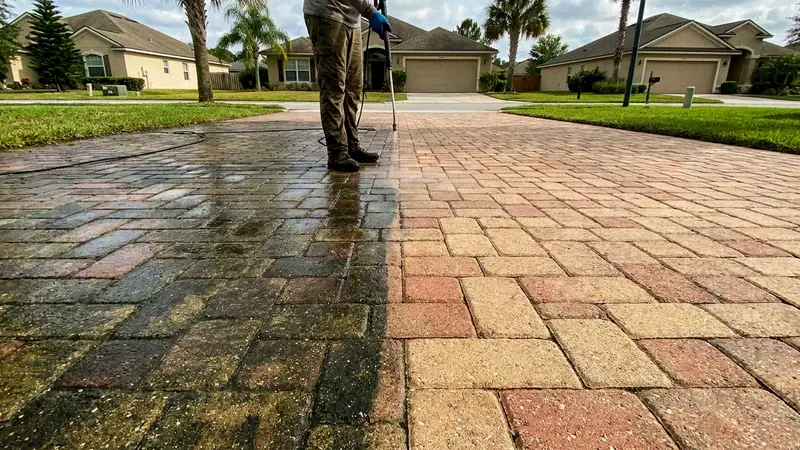
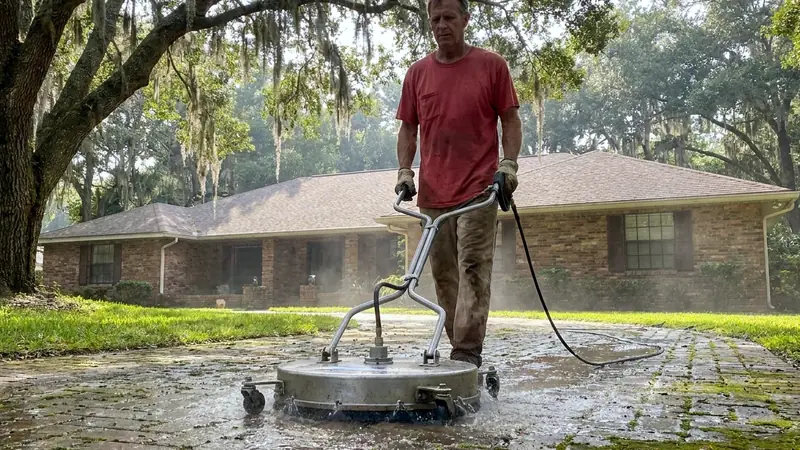
Cleaning removes dirt, algae and the chalky layer of an old coat, plus orange marks from sprinklers. Runoff is steered away from plants and screens where possible. Shaded lanai pavers usually need more time than a sunny drive. Any stain the first wash leaves behind is flagged ahead of the coat. Treat the walkway and any pool deck the same way as the drive.
Refill the joints
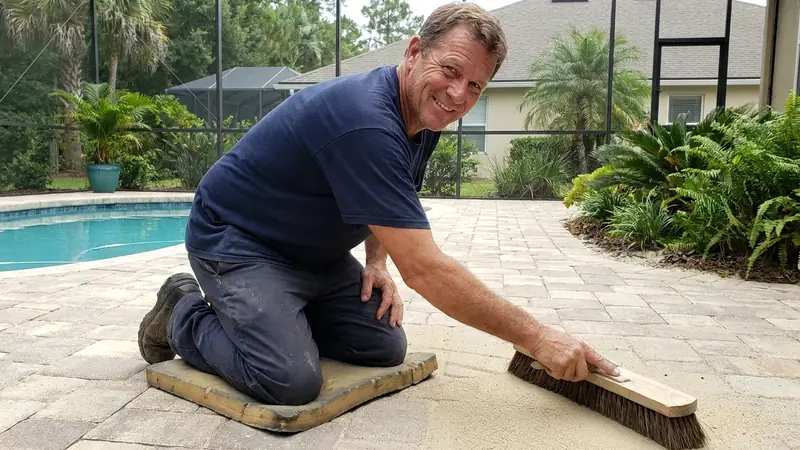
Fresh sand goes in once the wash has emptied the joints. Full joints keep soil out and give weeds less room, a point trade guides make about lost joint sand. The surface is swept before it dries. This step is what gives the sealer something solid to lock in. If the sand has been low for years, a second pass may follow.
Hold for dry weather
From mid May to mid October the rainy season can push a job back by a day. One local sealing company says it will not lay sealer if rain is coming before the coat cures. Low corners dry last, so they get checked first. Ask the contractor how the pavers will be checked for moisture before the first coat. Rain the night before can add a day. The wet season also brings high humidity, which slows drying on shaded lanais.
Lay the sealer
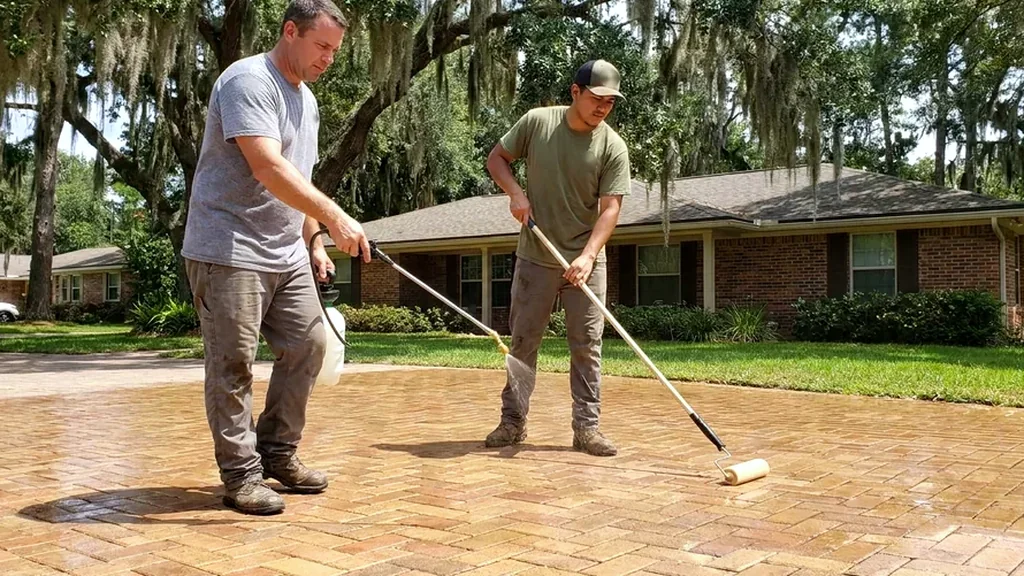
Sealer is applied at the end, in matte or wet look. Wet look is glossier and shows scuffs sooner. Walk the finished work with the contractor, checking edges and corners for thin spots. Ask when cars may return. You can ask for a second coat on areas that see the most traffic. Check edges and corners at the end, since sealer can run thin there.
Complete paver services in Fruitville
The work comes in a set order here. First the wash, then sand in the joints, then drying time, then the sealer last of all. Each one prepares the next. For a time estimate for your lot, call (941) 206-6354.
Fruitville lots vary, from older farm-edge parcels to newer subdivisions. Drives take tires, lanais hold damp air, and pool decks collect splash. A good plan treats each differently. Tell the contractor which areas matter most when you ask for a free estimate.
Two sealer types and two looks give four combinations. A past solvent-based coat rules out the water-based type on top. Matte is calm and hides scuffs, while wet look adds depth. For help choosing for your Fruitville home, call (941) 206-6354.
Rain sets the schedule. Southwest Florida's wet season runs May 15 to October 15, so dry days are worth catching. A local contractor tracks the radar and rebooks when rain is near. To ask about dates on your street, ask for a free estimate.
Questions to ask before you hire
- Do you look for sunken or loose pavers before you quote the job?
- Do you treat the green algae and black mold before the wash or after it?
- My HOA has to approve the sealer, so can you give me what they ask for?
- Can I see the finish on a spare paver before the whole job gets sealed?
- Is the price one number for the whole driveway, or does it change by area?
- Is a sealed pool deck safe for wet bare feet, and is there a grip option?
- What tells me it is time to seal again, and how long does a coat usually last?
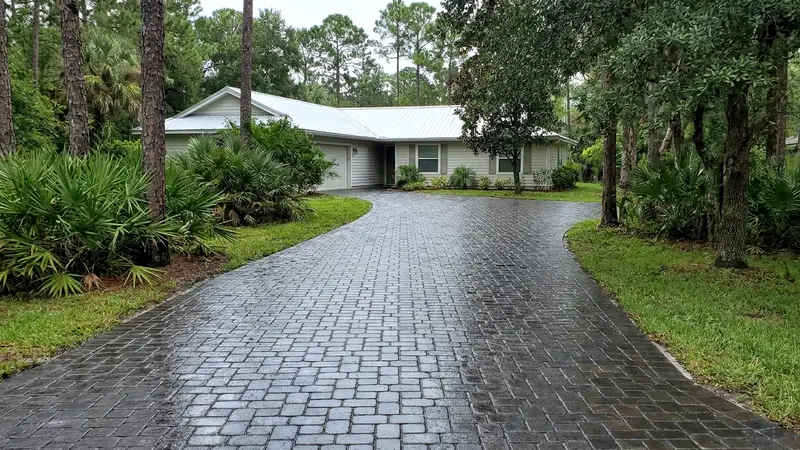
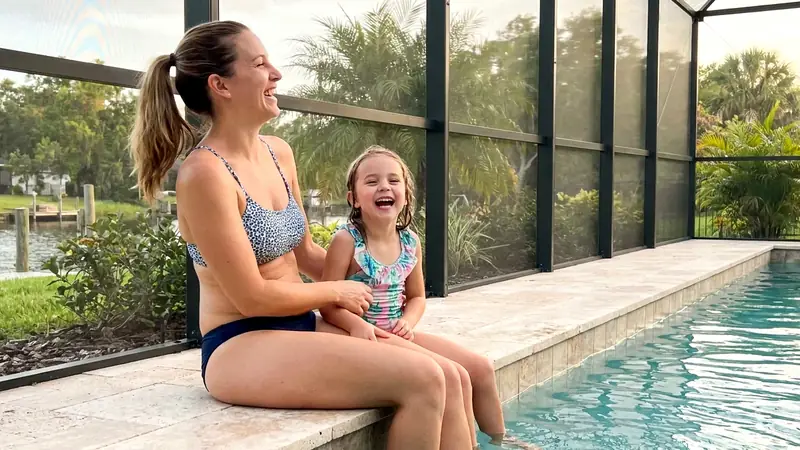
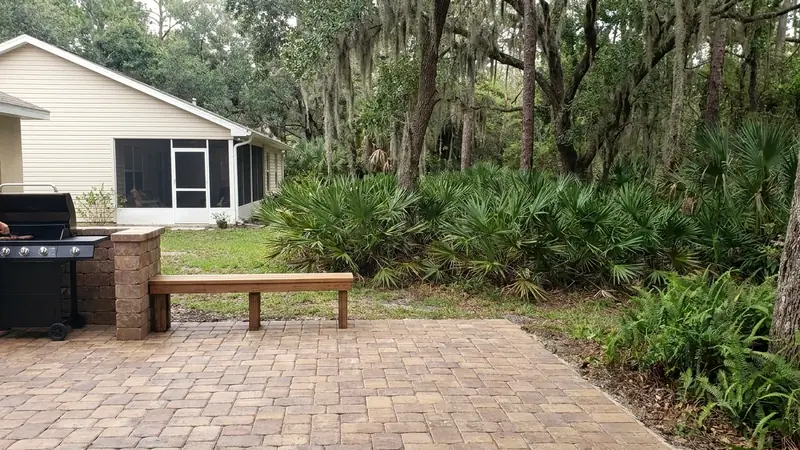
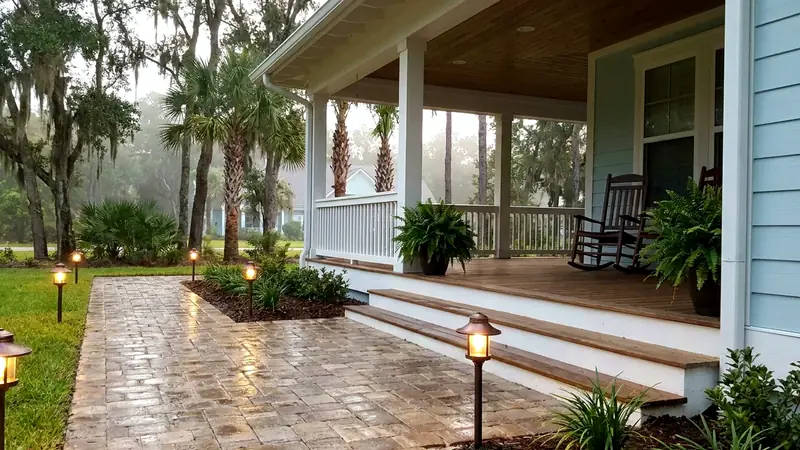
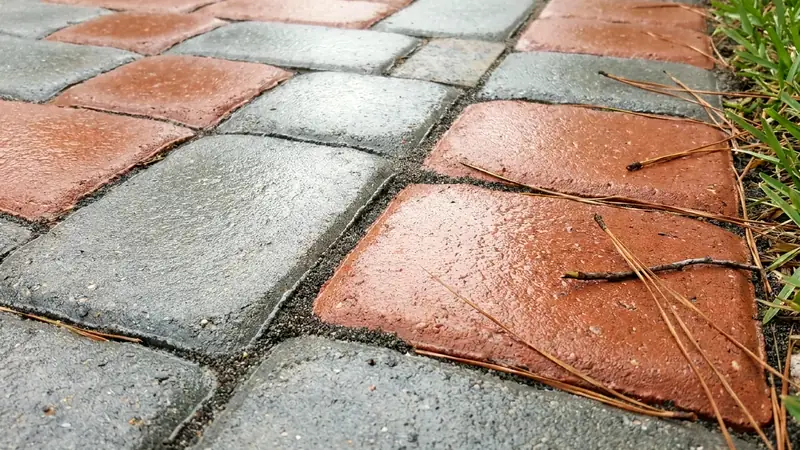
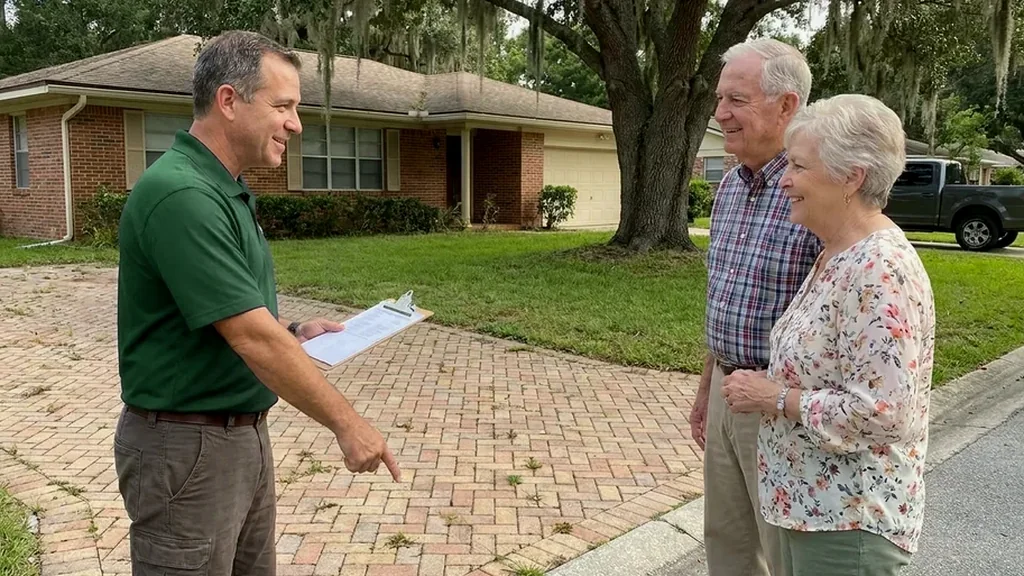
What do sealed pavers look like around Fruitville?
Why local matters in Fruitville
A contractor who knows Fruitville knows that the ground here was drained wetland. Low corners can stay wet, so a local pro plans extra drying time. A contractor who is new here may not think to ask. To talk with a contractor who works this part of Sarasota County, call (941) 206-6354.
Local knowledge also helps with directions and access. Fruitville Road, Tuttle Road and the area around the library are easy reference points. A contractor who works nearby can find your street and plan the visit quickly, so the estimate does not turn into a wasted afternoon. When you ask for a free estimate, mention a nearby landmark.
Fruitville has both farm-era roots and newer homes, so no two lots carry the same history. A local contractor asks questions about past coats, irrigation and shade before quoting. That saves surprises later. Describe your lot when you ask for a free estimate, and you owe nothing for the estimate.
What is the story behind Fruitville's name and farms?
Charles Reaves settled here in 1876, and some sources say he named Fruitville for the abundance of fruit. In the 1920s the nearby Celery Fields became Florida's third-ranked celery producer. Bertha Palmer's farms grew celery there until the last farms were bought in 1995. If you live near the old fields, ask for a free estimate.
The Celery Fields are now a county stormwater facility with an Audubon Nature Center that opened in 2016. Brown's Grove, a family farm since 1915, sits near the eastern end of Fruitville Road. The Fruitville Library, opened in 2001, serves the area too. Near any of these Fruitville landmarks, call (941) 206-6354 and name your street.
Frequently Asked Questions
How often should a Fruitville driveway be resealed?
Expect quotes of two to five years from coat to coat. One Southwest Florida company says most Florida pavers need it every 2 to 3 years. A faded surface, weeds returning and water that darkens the paver all point to a reseal. A simple walk across the lot every spring is a cheap way to catch wear early. Check again after a rainy stretch.
Should I reseal Fruitville pavers sooner if they stay damp?
Often, yes. A Southwest Florida company says the summer wet season feeds algae and mold, which cuts sealer life. Low or shaded Fruitville pavers deserve a check more often than a bright, open driveway. Ask the contractor to check the low corners of your drive, since those hold water the longest. Shady lanais that stay damp can turn green again faster than sunny walks.
Is it better to spray or roll paver sealer?
Often both. Unilock, a paver maker, describes a pump sprayer to put sealer down and a roller to pick up the excess. Ask which method your Fruitville contractor plans to use, and why. Neither tool fixes a dirty surface, so the wash and the sand come first. The coat should be even from edge to edge.
How much does it cost to seal pavers in Fruitville?
Plan around $1.50 to $3.00 per square foot, the band Southwest Florida companies publish for the full job. Total area, old coating and open joints decide where a Fruitville job lands. Have the square footage printed on the quote. Lanais and pool decks add to the total. A quote far below the band should prompt a question about missing steps.
Can homeowners seal their own pavers in Fruitville?
Some try, but the job has several steps, and sealer needs a dry surface. A contractor arrives with the washing, sanding and sealing equipment and prices the whole job by square foot. A free estimate lets you compare. Because the surface is washed and sanded before sealing, a contractor also notices low spots and open joints early. Those finds can save money later.
Will sealing stop weeds in my Fruitville paver joints?
It helps once the sand is back in the joints. The wash lifts sand out, and the contractor refills the joints before any coat. Gaps invite soil, and soil invites weeds. Sealer also helps hold the sand in place, which slows the next round of weeds. Pulling weeds alone does not change the joint gap.
Does the old Celery Fields ground affect my Fruitville pavers?
It may. The area was drained from marsh in the 1920s, and low spots can stay wet. Wet pavers invite algae, and sealer waits for dry. Point out any low corner to the contractor. A contractor can often tell from the surface whether the joints and the base have kept up with the ground. Ask what the pavers look like after a hard rain. The county restored the Celery Fields as a stormwater facility to protect homes downstream along Phillippi Creek, which tells you how wet the land used to be.
Does old sealer have to come off my Fruitville pavers first?
Not always, only when the two are compatible. A solvent-based coat will not take water-based sealer over it, so the contractor has to identify the old coat. Keep any receipt or label you find. A small test patch can show how the surface takes new sealer.
Ready for a Free Estimate in Fruitville?
Call (941) 206-6354 and tell us about your pavers.
Free, no obligation